The short answer
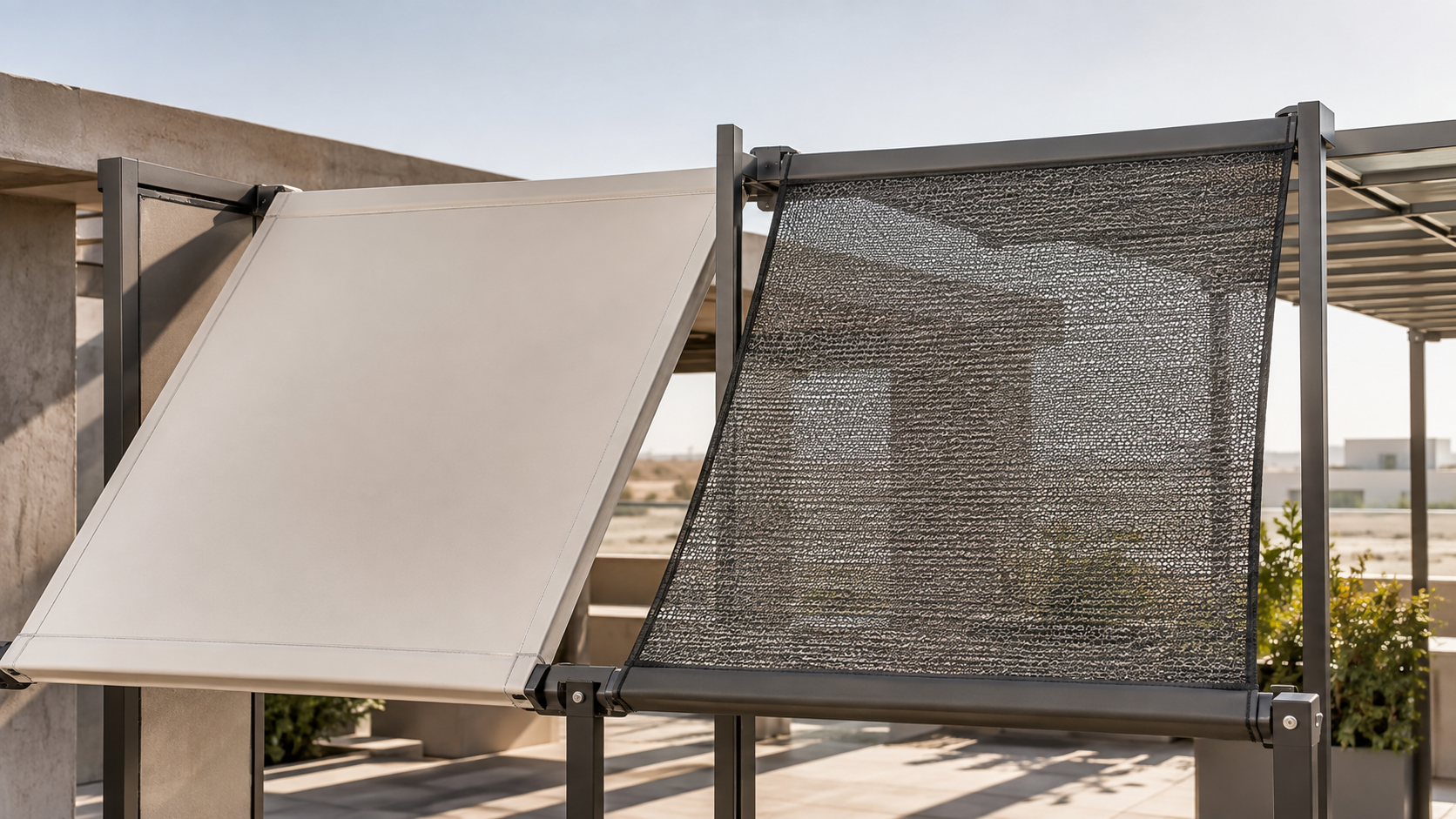
PVC and HDPE are both reliable shade materials, but they solve different problems. PVC is a coated, waterproof membrane chosen when rain protection and a solid architectural roof are priorities. HDPE is a knitted, breathable fabric chosen mainly for sun and UV protection with better airflow underneath.
The right option depends on your parking layout, required weather protection, roof slope, appearance and budget. A site assessment is the safest way to choose.
What is PVC waterproof shade fabric?
PVC shade membrane has a solid coated surface. When it is correctly tensioned over a suitable steel frame, it creates a clean roof that blocks direct sunlight and resists rain. It is frequently used for villa parking, commercial bays, entrances and outdoor working areas.
- ✓ Waterproof membrane surface
- ✓ Clean, solid architectural appearance
- ✓ Available in several colours and weights
- ✓ Suitable for curved and custom tensile shapes
- ✓ Requires correct slope, tension and drainage
What is HDPE knitted net fabric?
HDPE is a knitted shade cloth made for sun protection. Small openings in the material allow hot air to move through the roof, helping the covered area feel more ventilated. It reduces direct sunlight but is not a waterproof roof.
- ✓ Breathable and ventilated
- ✓ Effective UV and sun protection
- ✓ Usually lighter than PVC
- ✓ Available in different shade factors and colours
- ✓ Rain can pass through the knitted surface
PVC vs HDPE: the main differences
Choose PVC when waterproof coverage, a solid ceiling appearance and year-round weather protection matter most. Choose HDPE when your priority is reducing direct sun and heat while maintaining airflow.
PVC structures may need more careful drainage planning because water must leave the roof without ponding. HDPE allows water and air through, but its frame, foundations and fabric tension still need professional design for the span and wind conditions.
Which fabric should you choose in the UAE?
For a villa owner who wants a premium finished roof and rain protection, PVC is often the stronger match. For open parking areas, schools or long parking rows where ventilation and economical sun protection matter, HDPE can be very practical.
Do not select fabric only from a photo. Confirm the dimensions, column positions, steel specification, fabric warranty, drainage needs and installation location before accepting a quotation.
Frequently asked questions
Is HDPE shade fabric waterproof?
No. HDPE knitted fabric is designed mainly for shade, UV reduction and airflow. Rain can pass through it.
Does PVC make the parking area hotter?
PVC blocks direct sun, but because it is solid it does not ventilate like knitted HDPE. Roof height and open sides help manage airflow.
Can HDPE be replaced with PVC on an existing frame?
Sometimes, but the frame, slope, tensioning points and load capacity must be checked before changing the material.