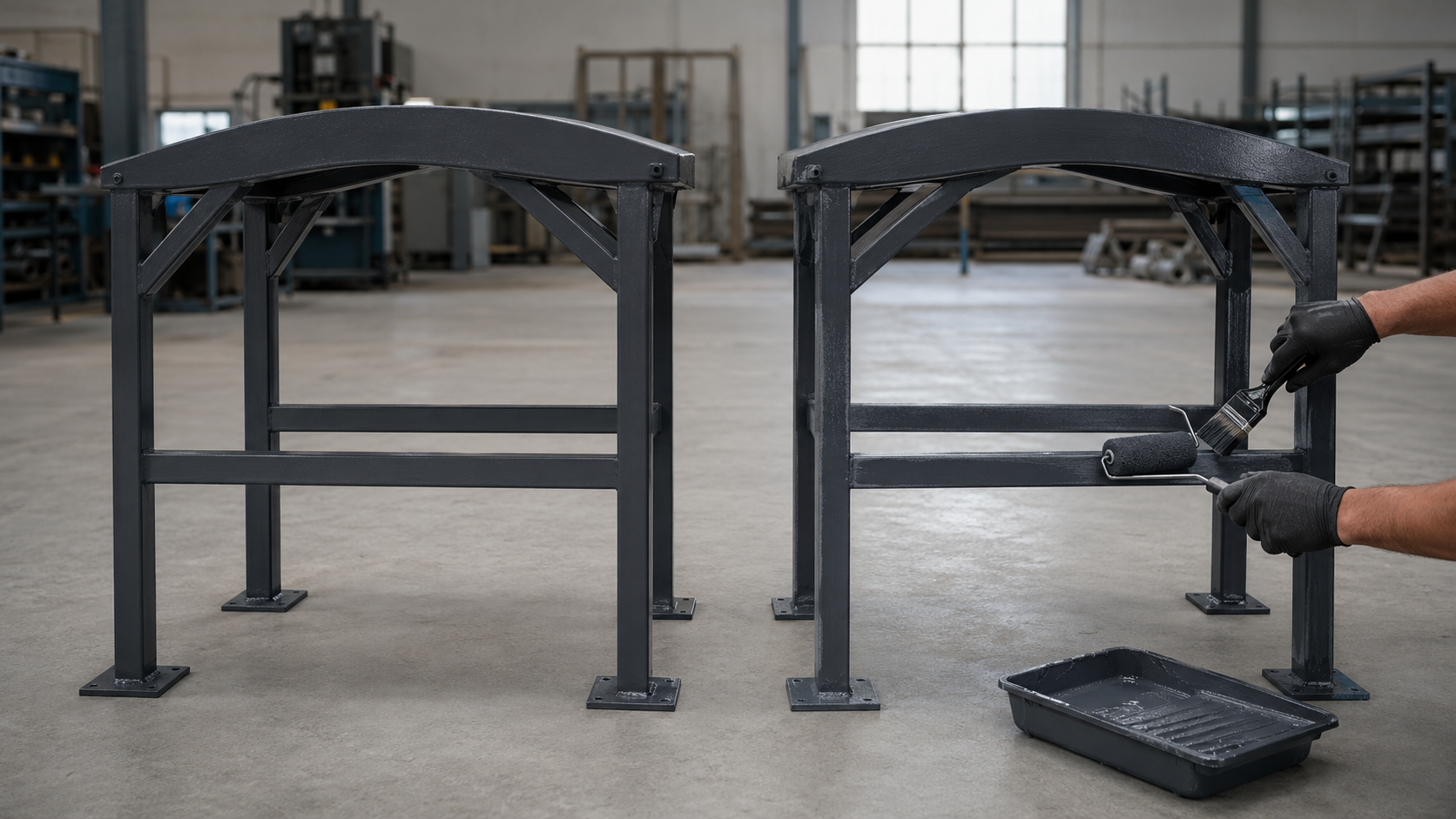
The short answer
Powder coating normally gives fabricated steel a harder, more uniform and factory-controlled finish than paint applied by brush or roller. When the steel is correctly cleaned, pre-treated, coated and oven-cured, powder coating can resist chipping, fading and everyday wear very well. It is an excellent option for decorative screens, pergolas, gates and parking-shade components that fit inside the coating facility.
Hand paint, more accurately called a wet-paint system, is not automatically poor quality. A properly specified system with surface preparation, zinc-rich or epoxy primer and a UV-resistant topcoat can provide strong outdoor protection. It is also more practical for very large frames, site-welded structures and future touch-ups. For UAE parking shades, the best choice depends on component size, fabrication sequence, coastal exposure, colour, access for maintenance and the quality of the complete coating process—not simply whether the applicator uses powder or a brush.
- ✓ Powder coating: harder, smooth and factory-cured finish
- ✓ Wet paint: flexible for large, complex and site-installed steel
- ✓ Preparation determines the life of both systems
- ✓ Outdoor powder must be the correct exterior-grade formulation
- ✓ A primer and topcoat system can make wet paint highly durable
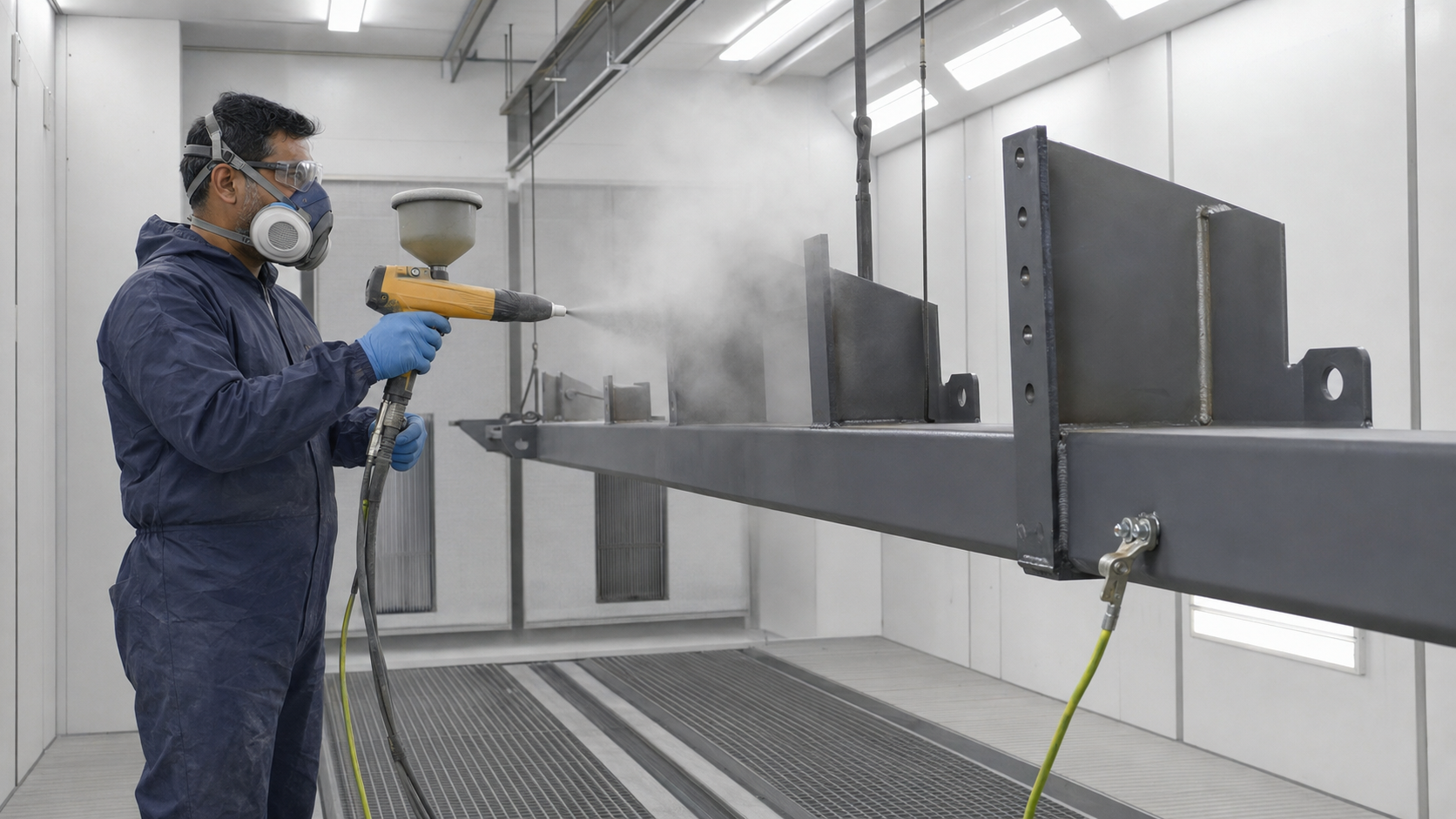
How powder coating is applied
Powder coating uses a dry, finely ground coating material. After degreasing, cleaning and suitable surface preparation, the steel is electrically grounded. An electrostatic spray gun charges the powder particles so they are attracted to the metal. The coated component then enters an oven, where heat melts and cures the powder into a continuous film.
This controlled process is one of powder coating's main advantages. The electrostatic application helps cover flat surfaces, corners and edges with an even layer, while oven curing creates a tough finish without the long air-drying time of many liquid paints. The applicator must still control film thickness, grounding, oven temperature and curing time. Heavy frames, deep recesses and tightly boxed corners can suffer from uneven attraction if the process is not adjusted correctly.
The steel component must fit into the blasting, coating and curing equipment. Large completed carport frames often cannot be powder-coated in one piece, so they may need to be designed as bolted modules. Any cutting, drilling or welding after coating damages the protective layer and requires a compatible repair.
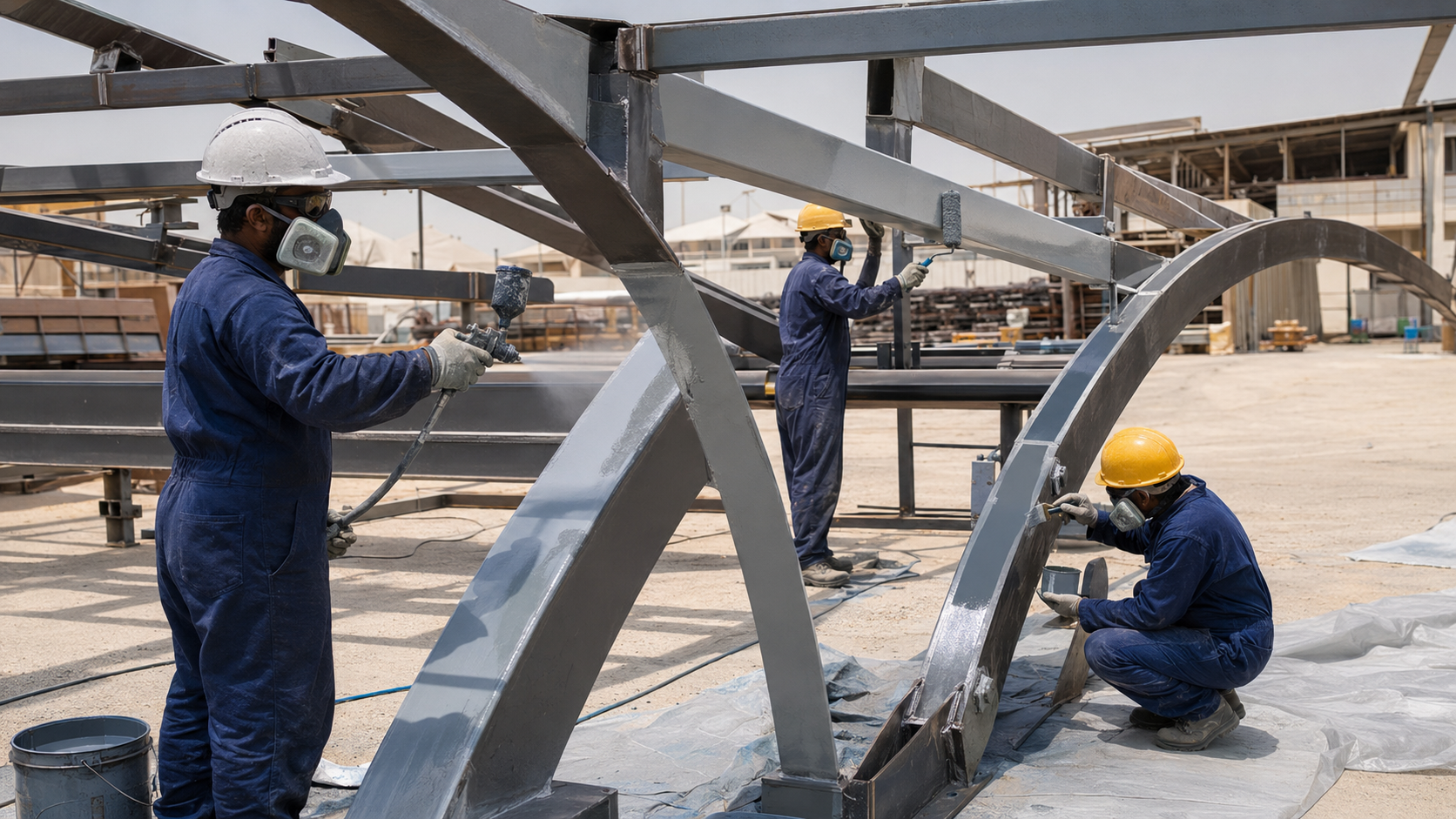
How hand-applied or wet paint works
The phrase hand paint may include brush, roller or conventional spray application. A professional wet-paint system is normally built in layers. The steel is cleaned and prepared, a corrosion-resistant primer is applied, intermediate coats may be added, and an exterior topcoat provides colour, gloss and UV resistance. Epoxy primers bond strongly and protect steel, but many epoxies chalk in direct sunlight, so an exterior polyurethane or another suitable UV-resistant finish is often used above them.
Wet paint can be applied in a workshop or on site. This makes it suitable for long trusses, welded cantilever structures, repairs around base plates and frames that cannot enter a curing oven. It also gives fabricators freedom to complete welding and alignment before the final site touch-up.
Brush and roller marks can be visible if workmanship is poor, but skilled preparation and spray application can produce a very smooth architectural finish. The important specification is not only the application tool. Clients should ask about surface cleaning, primer chemistry, dry film thickness, number of coats, drying time and the final weather-resistant product.
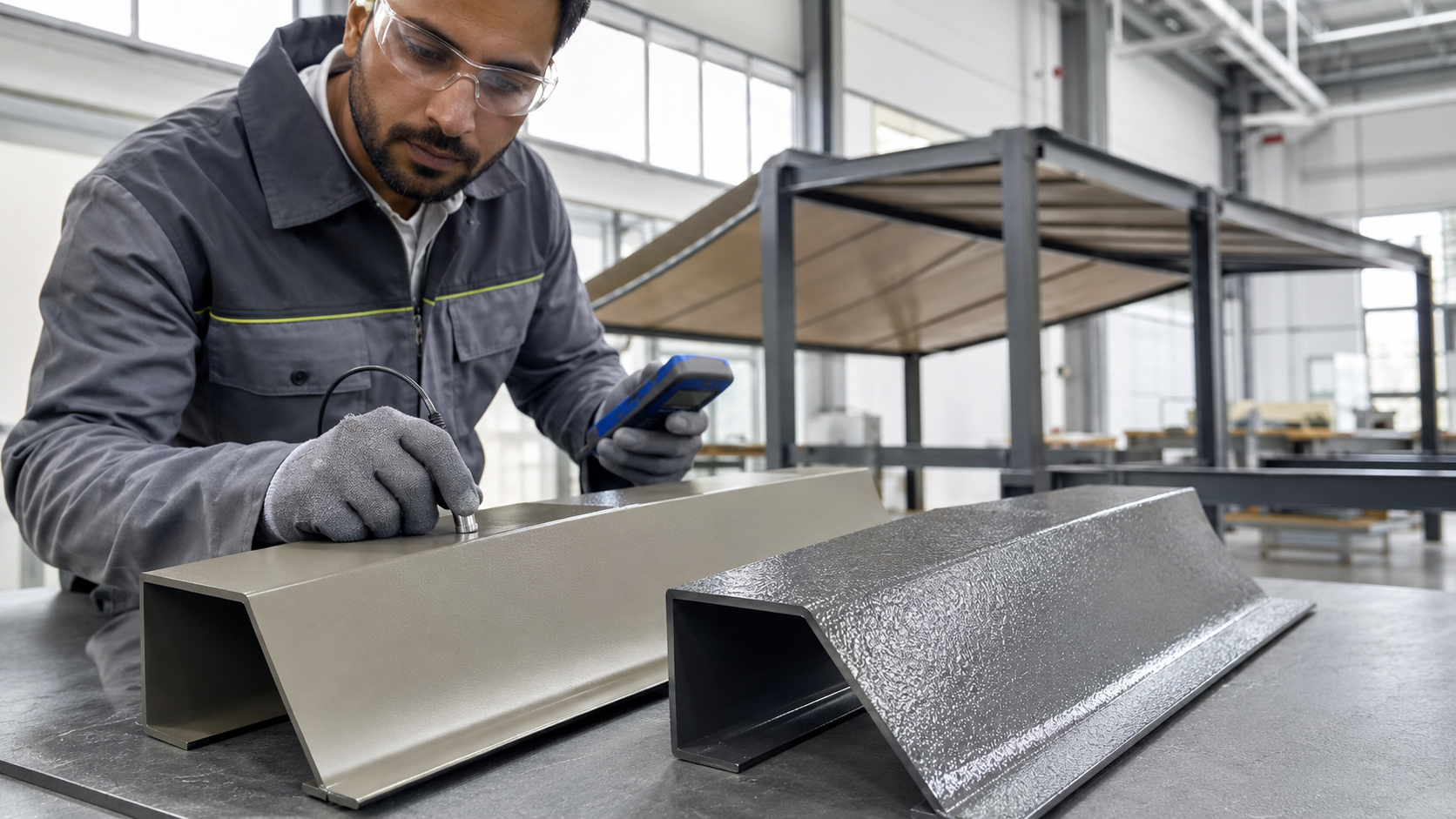
Finish quality and appearance
Powder coating is popular when a consistent colour and clean factory finish are priorities. It does not run or sag like liquid paint, and it can produce smooth, textured, matte, satin or gloss surfaces. Decorative laser-cut panels and vertical slats often look especially neat with powder coating because the colour is consistent across repeated components.
Wet paint offers a very wide colour range and can be matched to a villa façade, gate or existing structure. It is easier to mix a small quantity for future repair. Colour matching can still vary because of batch, age, sunlight and application conditions. Powder repairs may also look slightly different from the original cured surface, especially when a liquid touch-up product is used.
Neither method hides poor steelwork. Rough welds, sharp edges, grinding marks, oil and rust will remain visible or cause early failure. Premium appearance begins with fabrication quality and careful preparation before any coating is applied.
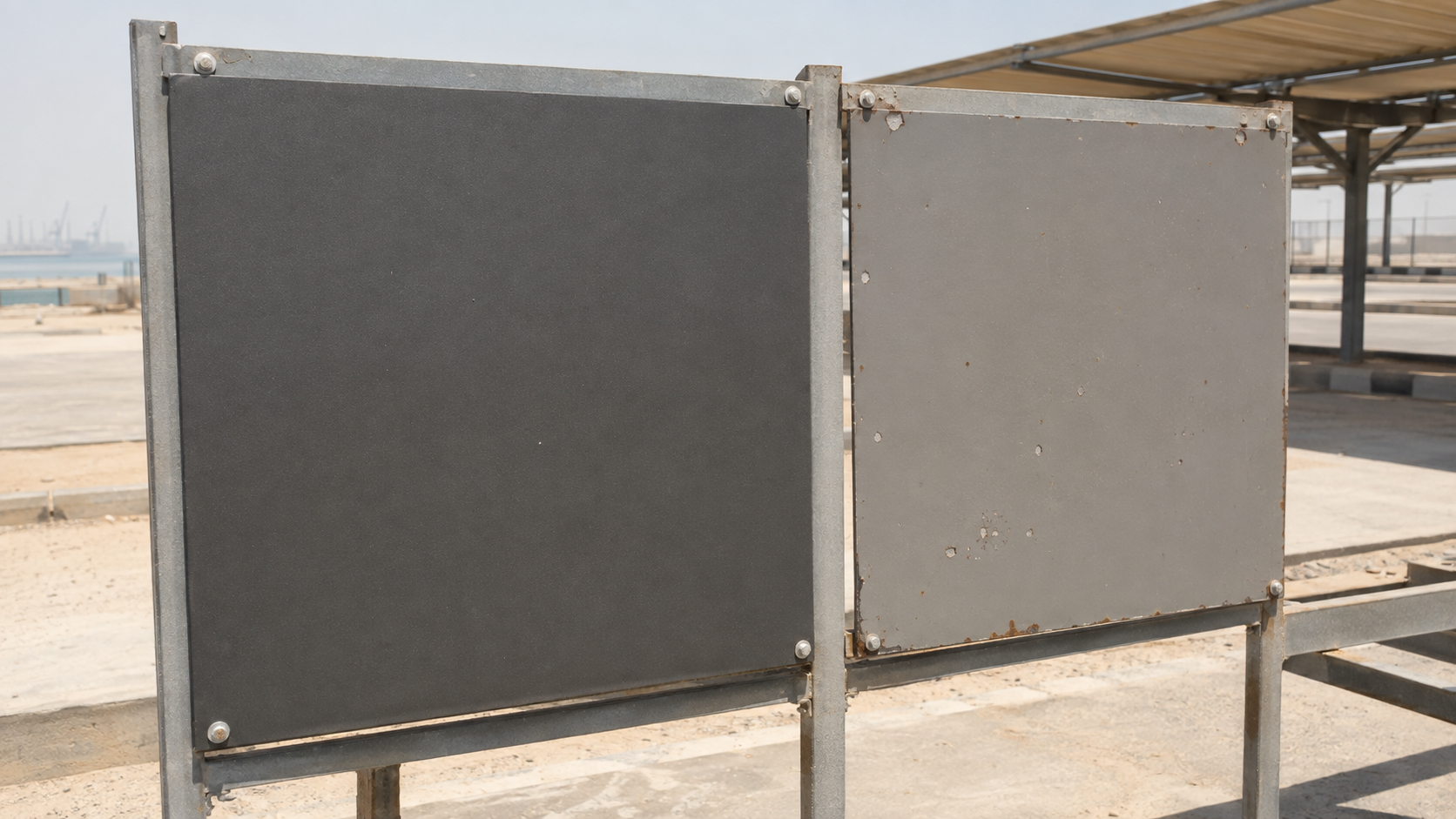
Durability in UAE sun, humidity and coastal weather
UAE outdoor steel faces intense sunlight, high temperatures, airborne dust, condensation, occasional rain and, near the coast, salt-laden humidity. Exterior-grade powder coating can perform very well, but interior decorative powder is not suitable for long-term direct sun. The supplier should specify a durable polyester or other approved exterior system with suitable UV and weather performance.
Wet paint can also protect outdoor structures effectively when the primer and topcoat are compatible with the environment. Epoxy primer plus an exterior-grade topcoat is commonly chosen for fabricated parking-shade steel. In coastal or industrial exposure, a more robust system, increased preparation and scheduled washing may be needed. Galvanizing underneath paint or powder can provide additional protection where specified correctly.
Coating failure often begins at welds, sharp edges, bolt holes, damaged corners and the bottom of columns where water and soil collect. Good drainage, sealed hollow sections where appropriate, raised base details and fast repair of scratches matter with both systems. No finish makes poor structural detailing maintenance-free.
Repairs and future maintenance
Wet paint has a clear advantage when easy site repair is important. A damaged area can be cleaned, feathered, primed and recoated without removing the complete structure. Owners can also refresh the colour after several years. The repair must extend to sound coating and follow the paint manufacturer's preparation and drying instructions.
Powder-coated components can be touched up with compatible liquid products, but a local repair may not perfectly match the original texture and gloss. Full factory recoating normally requires removal, stripping, preparation and oven curing. For bolted decorative panels this may be manageable; for a large welded carport it can be difficult.
Maintenance should include washing away salt and dust, checking scratches, inspecting weld zones and base plates, and clearing drainage. Fixing a small chip early is less expensive than repairing corrosion that has travelled under the coating.
Cost and project practicality
Powder coating may cost more initially because the parts need controlled preparation, electrostatic application, oven curing and transport to the facility. The result can justify the cost on repeat components, premium decorative work and modular structures. Large dimensions, unusual shapes and small one-off quantities may increase the price or make the process impractical.
Wet paint is often more economical and flexible for custom parking shades fabricated and installed at site. It avoids the oven-size limitation and allows final coating repairs after welding and erection. However, low quotations may exclude adequate surface preparation, primer coats or proper drying time. Cheap paint applied over mill scale or rust is not a genuine comparison with a professional powder-coated system.
Compare the complete scope: preparation method, primer, coating type, total film thickness, colour, expected exposure, transport, installation damage, touch-up method and warranty conditions. Lifecycle value matters more than the lowest first price.
Which coating should you choose?
Choose powder coating when the components are modular, fit inside the facility, need a premium uniform finish and will not require welding after coating. It is a strong choice for decorative screens, slats, pergola pieces, gates, brackets and carefully designed bolted shade frames. Confirm that the powder is exterior grade and that pre-treatment and curing are controlled.
Choose a professional wet-paint system when the shade is very large, custom welded, assembled on site or likely to need future colour changes and local repairs. Specify proper cleaning, an appropriate corrosion-resistant primer and a UV-stable topcoat instead of asking only for hand paint.
For harsh coastal sites or projects requiring extended corrosion protection, discuss hot-dip galvanizing plus a compatible paint or powder system. This duplex approach requires specialist preparation and should be designed before fabrication. JBM Car Parking Shade can review the location, frame size, fabrication method, appearance and maintenance access before recommending the most practical finish.
Frequently asked questions
Is powder coating always better than hand paint?
No. Powder coating usually provides a harder and more uniform factory finish, while a professional wet-paint system is often better for very large, site-welded or easily repairable structures.
Does powder coating rust?
The coating itself does not rust, but exposed steel can corrode if the film is damaged, preparation is poor or water reaches unprotected edges and welds.
Which finish is better near the sea in Dubai or the UAE?
Both need a specification suited to coastal exposure. Galvanizing with a compatible exterior paint or powder system may provide stronger protection for demanding seaside locations.
Can powder coating be repaired on site?
Small areas can be touched up with compatible liquid coating, but colour, texture and gloss may not match the original factory-cured powder perfectly.
Is epoxy hand paint suitable outdoors?
Epoxy primer is excellent for adhesion and corrosion protection, but many epoxies need a UV-resistant exterior topcoat for long-term direct sunlight.
How many images are included in this guide?
This guide includes five purpose-made images covering the comparison, powder process, wet-paint process, finish inspection and UAE weather exposure.